It examined how AI-powered gig platforms can worsen the “double burden” faced by women—the pressure of paid work alongside the often invisible demands of unpaid care work.
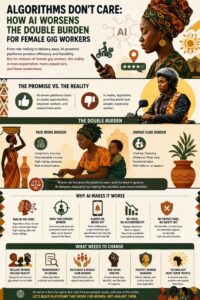
I found the argument so compelling that I decided to bring it into another form for my colleagues: an infographic that makes the issue easier to see, discuss, and share.
The bigger lesson for me is that technology is not automatically neutral simply because it is powered by algorithms.
An algorithm can optimise for efficiency, productivity, ratings and profit without understanding who is carrying the additional burden.
For women gig workers, that can mean:
• Long and unpredictable working hours
• Pressure from ratings and automated decisions
• Unpaid childcare, cooking, cleaning and care work continuing alongside paid work
• Limited social protection
• Algorithmic decisions that are difficult to question or appeal
• A system that sees their labour but not the circumstances surrounding it
And this is where the conversation about AI needs to become much more human.
When we design AI systems, whose realities are represented in the data?
Who gets to define what “efficiency” means? Who bears the cost when the algorithm gets it wrong?
AI should not simply make existing systems faster. It should help us build systems that are fairer, more inclusive, and more responsive to human realities.
That is why I believe AI literacy must go beyond learning how to use ChatGPT or automate tasks. We also need to understand the social consequences of the technologies we are deploying.
Technology should work for people—not quietly make difficult lives even more difficult.
I created the accompanying infographic as my own way of starting that conversation with colleagues.
What do you think: are we paying enough attention to the human costs of algorithmic decision-making?